
★ 本系列演講將以英文進行;會議室人數上限為50人
◎本訊息與中研院訊同步刊出
【演講摘要】
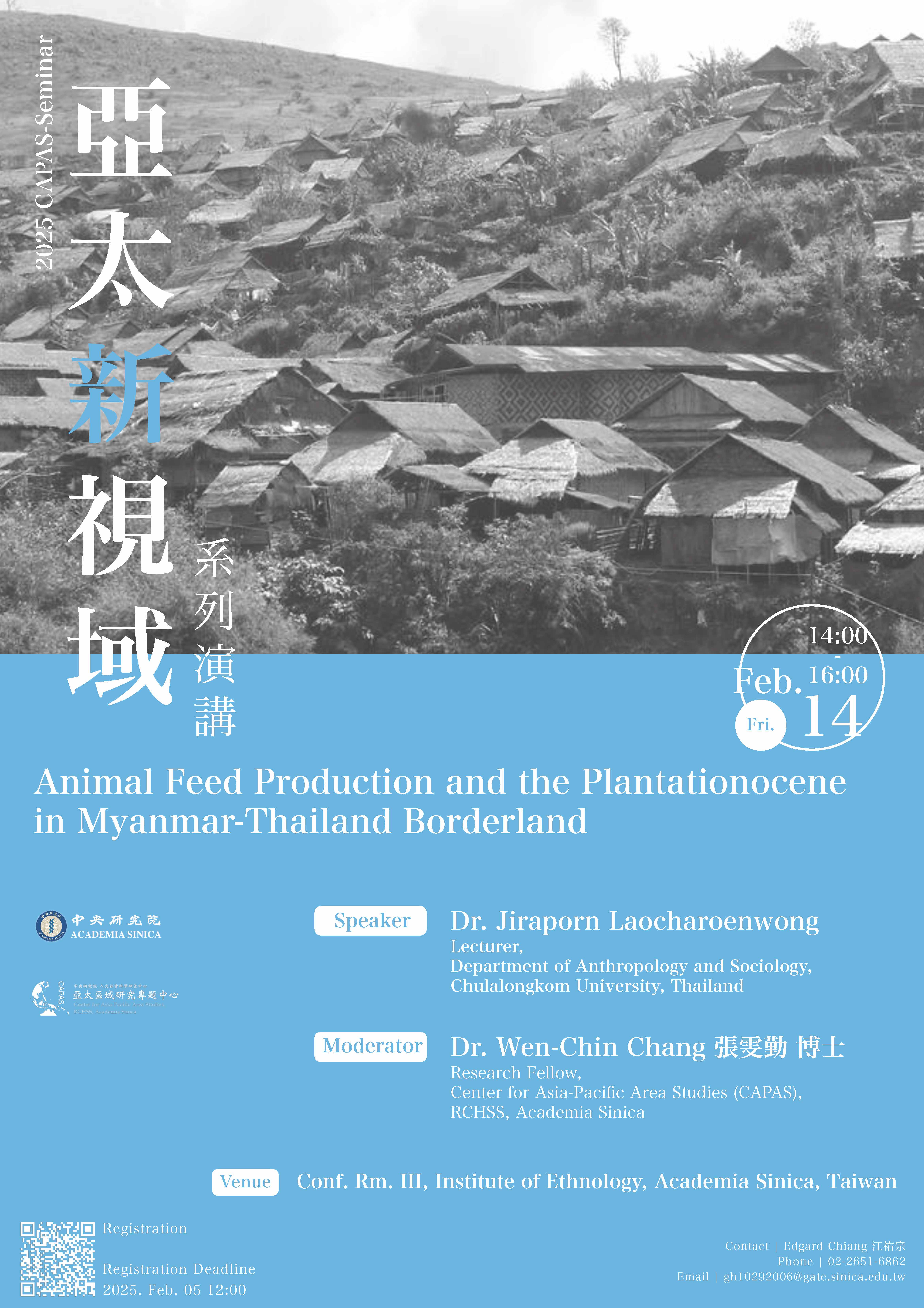
Over the past decades Chinese meat consumption has skyrocketed. Not able to meet demand due to a scarcity of agricultural land and geopolitical tensions with major beef-exporting countries, China has set its eyes on Southeast Asia as a supplier of meat, as well as a provider of ‘land to grow the meat’. The Central Dry Zone in Myanmar has a large cattle surplus, and a quasi-legalized food supply chain has come into existence over the last decade. Yet Myanmar cattle are scrawny, need fattening and care before China will accept them. The borderland area straddling Northwest Thailand and Southeast Myanmar has emerged as an area where the Anthropocene and Plantationocene become entangled. This is a longtime conflict zone: cattle and other animals pass the border as refugees from several ethnic groups flee from the Burmese army. Forested areas are converted into agricultural land to grow corn, cassava, rice, and hay for animal feed production, while burning stalks after every harvest season causes massive swaths of PM 2.5 and air pollution over Northwestern Thailand, covering Chiang Mai province in a haze for a few months each year. Agricultural laborers are largely undocumented migrants from Myanmar, whose lives have come to depend on the ‘illegal but licit’ work in precarious conditions for the purposes of crop and animal feed production. While macro-level impacts of meat production are well-described in terms of required land and water resources, this paper sheds light on its many meso-level entanglements and argues that the Plantationocene manifests itself clearly in this Myanmar-Thailand borderland.
【備註Note】
- 主辦單位保留更改活動及審查報名資格權利,兩次以上無故缺席者,將取消報名資格。
- 送出報名表單並不代表成功錄取,錄取通知信將於報名截止後以email寄出。
- 為響應紙杯減量,敬請自備水瓶或杯子。